Ethnography In Action - Professor Eleanor Preston-Whyte, Director: Social and Behavioural Science - HIVAN
|
|
|
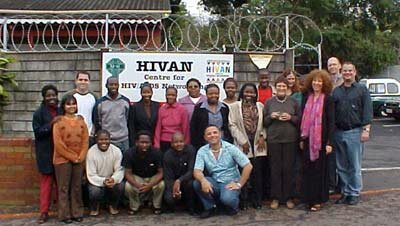
Front (crouching left to right): Thulani Hadebe, Lucky Magwaza, Anam Nyembezi, Vagner de Almeida. Middle: Hema Ramduth, Sizwe Phakathi, Sibongile Mkhize, Zanele Mchunu, Xoliswa Keke, Sayinile Zungu, Professor Eleanor Preston-Whyte, Ida Susser, Richard Parker. Back: Winnie Ogana, Miguel Munoz-Laboy, Thembeka Mngomezulu, Phumzile Ndlovu, Phakama Mhlongo, Laura Washington, Khumubulani Hlongwana, Robert Sember.
|
The first of four annual Ethnography courses to be run by HIVAN, in partnership with the Mailman School of Public Health at Columbia University, New York, draws to a close at the end of June. The courses train researchers and NGO workers to address the HIV/AIDS crisis.
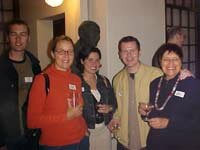
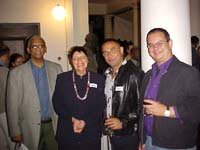
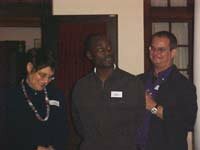
A cocktail party marked the end of the first set of training sessions, which trainees agreed were inspiring and empowering. It was held at the historical Campbell Africana Collections Museum, presided over by the Director, Professor Seleti. Professor Eleanor Preston-Whyte welcomed the guests as a community of people who "&are all passionate about research, ethnography and doing something about the AIDS epidemic".
The Ethnography courses are sponsored by the NIH (National Institutes for Health). The trainees have summed up their experiences anonymously:
"Interviewing people will never be the same again."
"The workshop was participative and interactive. It drew a lot from the participant's experiences and was able to provide illustrations where participants needed clarity. It has been enriching and empowering"
"Ethnography surely is one discipline which can really get meaning from people's interactions."
"I wrote notes in several workshops before which did not give any meaning when I reflect. To this course, I'm saturated by my notes, I love them and I enjoy reflecting on them"
"In the process we are able to learn through experience sharing"
"I find it exciting, practical, participative and integrative. I am able to draw from the research participants and their experiences and find it empowering in terms of where knowledge generation and community development is concerned."
 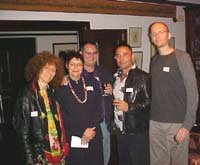 Professor Preston Whyte (HIVAN) and Professor Richard Parker (Columbia University) designed the Ethnography course. They were also among the key trainers. Other members of the University of Columbia training team include Doctor Robert Sember; Doctor Miguel Munoz-Laboy; Professor Ida Susser and Professor Vagner de Almeida. Contributory trainers are HIVAN Deputy Director Jill Kruger, Dr Rachel Bray (University of Cape Town), Mark Hunter (on his Isithebe research) and Professor Keyan Tomaselli, Head of UND's Culture, Communication and Media Department with visiting academic Dr Matthew Durington from Temple University. Four ethnographic films were screened during the first training session for discussion and analysis, two from America and two from South Africa. Professor Preston Whyte (HIVAN) and Professor Richard Parker (Columbia University) designed the Ethnography course. They were also among the key trainers. Other members of the University of Columbia training team include Doctor Robert Sember; Doctor Miguel Munoz-Laboy; Professor Ida Susser and Professor Vagner de Almeida. Contributory trainers are HIVAN Deputy Director Jill Kruger, Dr Rachel Bray (University of Cape Town), Mark Hunter (on his Isithebe research) and Professor Keyan Tomaselli, Head of UND's Culture, Communication and Media Department with visiting academic Dr Matthew Durington from Temple University. Four ethnographic films were screened during the first training session for discussion and analysis, two from America and two from South Africa.
Practical projects included recording observations at the training site at McCord's Hospital, mapping the physical layout of a stretch of the Durban beachfront and recording early morning activity there, interviewing and data collection.Enrolling trainees with NGO backgrounds together with academics and graduates proved valuable. Candidates from NGO organisations and outlying districts brought a wealth of experience in the HIV/AIDS epidemic which stimulated questions about field research and the framing of research questions. The meeting of people, from different walks of life, allowed for a stimulating combination of persons with a "grass roots" awareness, with others with academic backgrounds who have both qualitative and quantitative approaches.
Guests at the cocktail party included the trainers and trainees, senior personnel from the University of KwaZulu-Natal, Dr Holst and Dr Giddy from McCord Hospital, Ms Jabulili Madondo from the eThekwini local government and guests from NGO organisations. Persons with a particular interest in HIV/AIDS research were also present, such as Mr Jack Hillmeyer, US consulate political advisor and his political assistant Mr Nkosikhulule Nyembezi, as well as representatives from the HEARD Institute and the Reproductive Health Unit Research Unit.
?
|